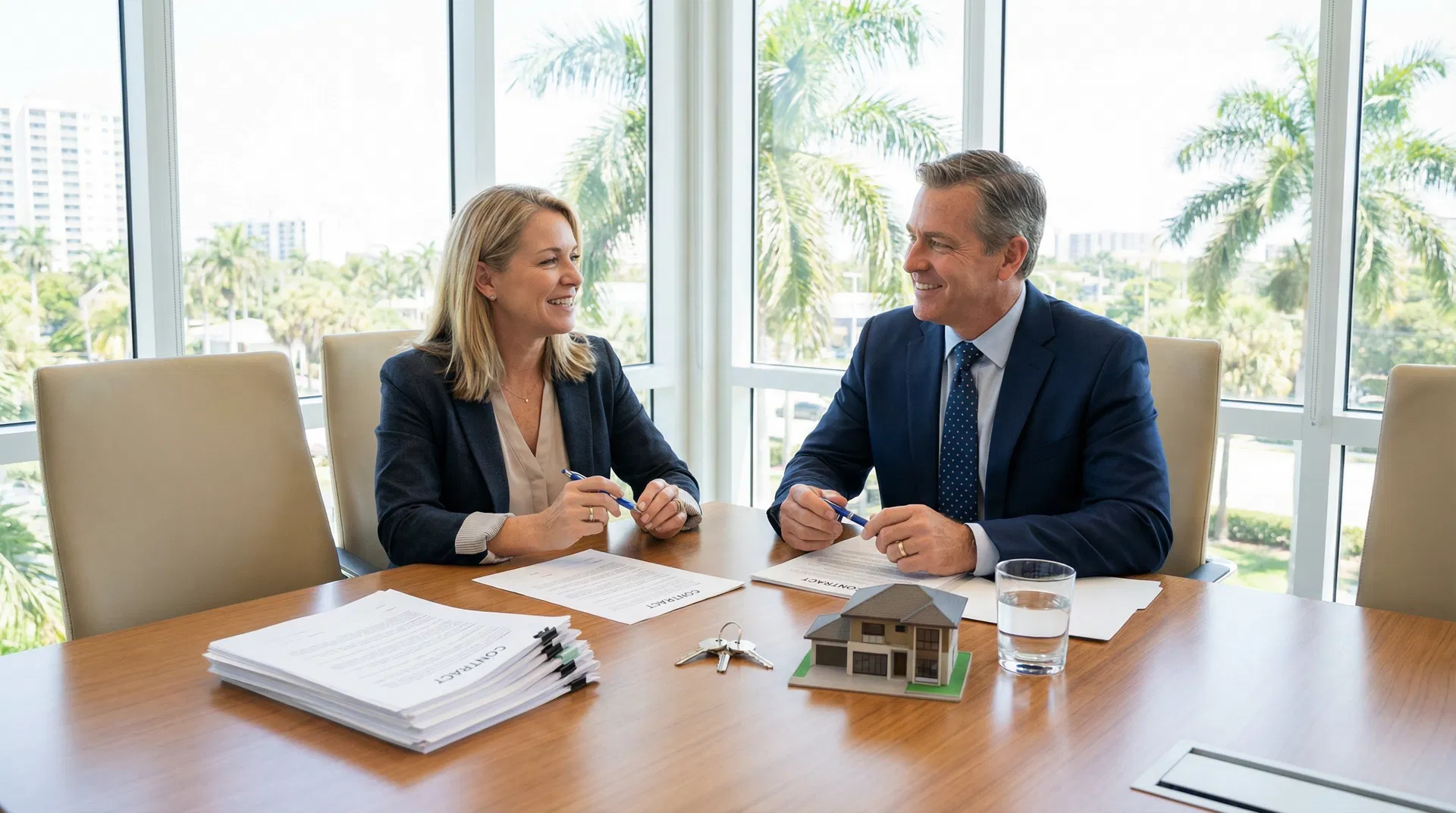
TL;DR: A Florida real estate closing is the final step in a property transaction, where ownership officially transfers from seller to buyer. Knowing what to bring, what to expect, and what happens afterward makes the process straightforward rather than stressful.
Why Closing Day Feels Overwhelming (And How to Change That)
For many buyers and sellers, closing day is one of the most stressful parts of a real estate transaction. You are signing documents you have never seen before, transferring large sums of money, and making decisions that will affect your financial future. The antidote to that stress is preparation — and that is exactly what this guide provides.
Before Closing Day: What to Do in Advance
Review Your Closing Disclosure
At least three business days before closing, your title company will provide a Closing Disclosure (or, for cash transactions, a settlement statement). This document itemizes every cost associated with the transaction. Review it carefully and contact your title company immediately if anything looks incorrect or unexpected.
Arrange Your Funds
For the funds you owe at closing, you will need to wire the amount to the title company's escrow account. Your title company will provide wiring instructions. Be extremely cautious about wire fraud: always verify wiring instructions by calling the title company directly using a phone number you obtained independently, never from an email.
At the Closing Table: What to Expect
What to Bring
You will need a valid, government-issued photo ID such as a driver's license or passport. The closing agent is required to verify your identity before documents can be signed.
The Document Signing Process
Closing typically takes about an hour or so. Cash closings tend to be shorter. Closings involving a mortgage include a large volume of lender-required documents in addition to the title company's documents.
The closing agent will walk you through each document and explain what you are signing. Do not hesitate to ask questions. A good closing agent welcomes questions and takes the time to make sure you understand what you are agreeing to.
Key documents you will sign include the deed (seller signs, transferring ownership to the buyer), the settlement statement showing all financial details, and for buyers with a mortgage, the promissory note and mortgage.
Fund Disbursement
Once all documents are signed and the lender has confirmed that funds are ready to be released, the title company disburses the funds. The seller receives their proceeds, existing mortgages are paid off, real estate commissions are paid, and all other closing costs are distributed to the appropriate parties.
Recording the Deed
After closing, the title company records the new deed with the County Clerk of Court. This is the official legal act that transfers ownership from the seller to the buyer. Recording typically happens the same day or the next business day.
After Closing: What Happens Next
Your Closing Documents
Keep all of your closing documents in a safe place. You will need them for tax purposes, future refinancing, and if you ever sell the property.
Title Insurance Policies
Your title insurance policies are issued after closing, typically within a few weeks. Keep these documents in a safe place.
Property Tax Records
The county property appraiser's office will update the ownership records to reflect the new owner. If you plan to apply for the Florida homestead exemption, you must do so by March 1 of the year following your purchase.
Mortgage Payments
Your first mortgage payment is typically due on the first of the month following a full month after closing. Depending on your closing date, this means your first payment is generally due 45 to 60 days after closing. Your lender will send you payment instructions.
Key Takeaways
- Review your Closing Disclosure at least three business days before closing and flag any discrepancies immediately.
- Wire your closing funds in advance — always verify wiring instructions by phone using a number you obtained independently.
- Bring a valid government-issued photo ID to closing.
- Closing typically takes about an hour or so; mortgage closings take longer than cash closings.
- Keep all closing documents in a safe place — you will need them for taxes, refinancing, and future sales.
Closing With Confidence
The closing process does not have to be stressful. At Closing Pros LLC, we believe that every buyer and seller deserves to arrive at the closing table informed, prepared, and confident. Our team, led by attorney John Wickman, Esq., takes the time to explain the process, answer questions, and ensure that every closing reflects the care and expertise that your transaction deserves.
If you are preparing for a real estate closing in Florida, we would be honored to be your title company.
Frequently Asked Questions
How long does a Florida real estate closing take?
Most Florida closings take about an hour or so. Cash closings tend to be shorter because there are fewer documents to sign. Closings involving a mortgage typically take longer due to the volume of lender-required documents.
Do buyers and sellers have to be at the same closing in Florida?
No. In Florida, buyers and sellers can sign their closing documents separately. Many closings are conducted with the parties signing at different times or even remotely, depending on the preferences of the parties and the lender's requirements.
What ID do I need to bring to closing in Florida?
You will need a valid, government-issued photo ID such as a driver's license or passport. The closing agent is required to verify the identity of all parties before documents can be signed.
Can I do a remote or mail-away closing in Florida?
Yes. Florida law permits remote online notarization (RON), which allows buyers and sellers to sign closing documents electronically using a webcam and a licensed online notary. Contact Closing Pros LLC to discuss whether a remote closing is available for your transaction.
What happens if I find a problem with the property after closing?
If the issue relates to the title (such as an undisclosed lien or ownership dispute), your owner's title insurance policy may cover the claim. If the issue relates to the physical condition of the property, that would typically be addressed through your homeowner's insurance or a warranty claim, not title insurance.
Closing Pros LLC | 46 N Washington Blvd, Suite 15, Sarasota, FL 34236 | Phone: (941) 933-7767 | Email: team@closingprosllc.com